The question of costs comes up first in almost every initial consultation — and it is answered evasively surprisingly often. “It depends,” “fair,” “performance-based”: These are words, not numbers. This guide shows you which pricing models OnlyFans agencies use, what a percentage actually applies to, and how to calculate an offer yourself in five minutes. It is aimed at adult creators who want to make a decision instead of being talked into one.
To put it upfront so it does not get buried in the fine print: At OnlyFans-Manager.de, the share for full service is 30 to 50 percent. Which figure applies in your case and what it is based on will be stated in writing in the offer — before you sign anything.
The three pricing models at a glance
Almost all agencies work with one of three models. None is automatically good or bad. What matters is whether the model fits your situation and whether it is fully disclosed.
- Revenue share: The agency receives a percentage of your revenue. No revenue, no commission. This is the standard in creator management because the risk is shared.
- Flat fee: A fixed monthly amount, regardless of the results. Typical for individual services such as social media management or advertising campaigns, and rare for full service.
- Hybrid model: A small base fee plus a lower percentage. This can make sense if an agency does a lot of work upfront, for example when restarting with a photo shoot and channel development.
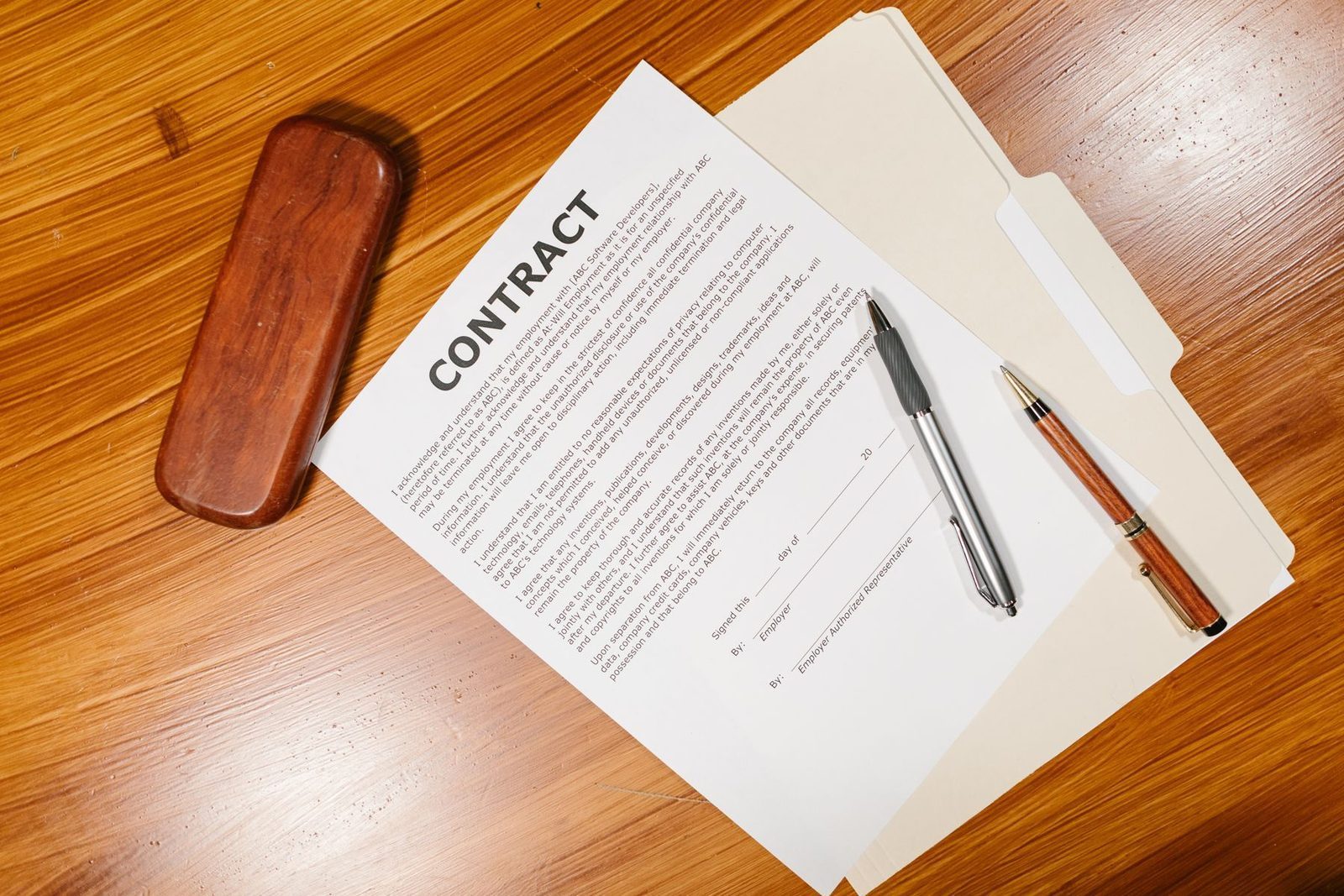
You should be suspicious of setup fees that are due before any service is provided, “training packages” used as an entry requirement, and models in which the agency charges both a percentage and a flat fee without clearly describing the service provided in return.

What does the percentage apply to?
This is the most important question in the entire conversation. A rate of 40 percent can mean very different things depending on what it is deducted from. OnlyFans keeps 20 percent of every payment as a platform fee. What reaches you is therefore 80 percent of the gross revenue.
If the agency’s share is based on gross revenue, meaning the amount before the platform fee, it is significantly more expensive than the same percentage based on net revenue, meaning what is actually paid out. Reputable offers explicitly state the basis of calculation. If it is not included, ask — and have the answer given to you in writing.
Other points that belong in the calculation: Are chargebacks and refunds deducted before the commission? Do tips and PPV messages count? And does the percentage apply to all platforms or only those the agency actually manages?
Same operator: porno-casting.net (18+) explains in its article on agency commissions how commissions should generally be assessed across the market.
Example calculation: one month with $5,000 in revenue
Let’s assume your account generates $5,000 in gross revenue from subscriptions, messages, and tips in one month. The figures are an example calculation, not a forecast.
- Platform fee of 20 percent: $1,000. The payout is $4,000.
- Agency share of 40 percent of the net amount: $1,600. You keep $2,400.
- Agency share of 40 percent of the gross amount: $2,000. You keep $2,000.
The same figure in the contract, a $400 difference per month. Over the course of a year, that is more than some creators earn in total during their first quarter. Taxes and social security contributions still have to be deducted from your share — more on this in our article about Taxes for Creators.
For your own reference, you can use the Revenue calculator It shows a model based on subscription price, region, and traffic — not a guarantee, but a starting point for evaluating an offer.
What should be included in 30 to 50 percent
A share at this level is only justified if the agency takes on real work. With full service, this generally means:
- Strategy and positioning: Who you are on the platform, which prices to set, and where your boundaries are.
- Chat support in set shifts, according to your rules and with clear boundaries.
- An editorial calendar, image selection, copy, mass messages, and PPV planning.
- Promotion outside the platform, such as through social media or advertising.
- Monthly reporting with figures you can verify yourself in the dashboard.
We explain how these components work together on the page Creator management. If an agency charges 50 percent but only gives “tips” and occasionally plans a post, the ratio is not right.
Identifying hidden costs
The most expensive items are rarely in the headline. When reading an offer, pay attention to these points:
- Minimum terms with penalties: Anyone who binds you for twelve months and charges a flat fee if you terminate early is shifting their risk onto you.
- Commission after the contract ends: Some contracts secure the agency a share for months after termination from fans it has “acquired.”
- Advertising and tool costs: Advertising budgets and software are legitimate, but they should be agreed on in advance and documented.
- Payouts through the agency: If the money first flows into an agency account, you lose control. The payout should go to your account.
The article explains why the last point is non-negotiable Your account stays your account.
When an agency is worth it — and when it is not
An agency is worthwhile if it creates more additional revenue or more free time than it costs. That sounds obvious, but it is rarely calculated. If you currently earn $2,000 per month and spend four hours chatting every evening, management may make sense even if your net amount initially stays the same — because you gain time for content, rest, or a second channel.
Conversely, anyone just starting out and who has not yet established a routine does not necessarily need full service. Sometimes a starter package with strategy and chat rules is enough, while you handle the rest yourself. A good initial consultation will tell you this honestly, even if the agency earns less as a result.
Questions you should ask every agency
- How high is the share, and is it based on gross or net revenue?
- Is there a minimum term, a notice period, or a contractual penalty?
- Who has access to the login, email, and payout account?
- Which services are specifically included, and which cost extra?
- What does the monthly reporting look like, and can I verify the figures myself?
- What happens to content and fan contacts if we part ways?
A reputable agency will answer every one of these questions without hesitation. You can find more criteria for evaluation on our page Trust and in the guide choosing an agency properly.
Multiple platforms, multiple percentages?
Many creators do not work only on OnlyFans, but also on Fansly, Fanvue, or a webcam platform. This raises the question of whether the agency’s share applies to all revenue. A fair arrangement covers only the platforms the agency actually manages. If you have been running a webcam channel yourself for years, there is no reason why the agency should profit from it.
The same applies to income from collaborations, merchandise, or advertising deals on social media. If the contract broadly states “all income from your work as a creator,” it may cover far more than you had in mind when signing. Have them list the affected income sources individually.
How terms can change over time
A percentage does not have to remain the same forever. Some agencies use a tiered structure: a higher share during the growth phase, when there is a lot of work and little revenue, and a lower share once a certain revenue threshold is reached. Others agree to have a joint discussion about the terms after a few months. Either approach can be fair as long as the rules are established in advance and any change is possible only with your consent. A clause allowing the agency to adjust the rate unilaterally does not belong in a fair contract.
Also check what the reporting looks like. A good monthly report lists revenue by source, the platform fee, refunds, the calculation basis, and the resulting agency share. This allows you to reconcile every statement with the figures in your own dashboard without having to take anything on trust.
Quick answers
What does an OnlyFans agency cost on average? For full service, shares between 30 and 50 percent are common. Lower rates are generally available for partial services, such as chat only or promotion only.
Is a higher percentage automatically worse? No. What matters is the reference point, scope of services, and contract terms. 40 percent without a fixed term can be more favorable than 30 percent with a one-year commitment and penalty clause.
Do I have to pay anything upfront? With revenue-share models, no upfront payment should generally be necessary. Exceptions such as an advertising budget should be agreed in writing.
If you want to know exactly what an offer from us includes, contact us via the contact form. You will receive a figure, a basis of calculation, and a description of the services—in black and white.